Troubleshoot common hole machining issues including oversize holes, poor roundness, position error, bad cylindricity. Find root causes & solutions for CNC drilling.
Case Details
Common Problems and Solutions for Drilling / Hole Machining
During CNC drilling with solid carbide drills, manufacturers frequently encounter various hole quality defects.
Below we summarize typical machining problems, root causes, and actionable solutions for daily production.
1. Oversize Holes / Irregular Hole Size
Phenomenon
Hole diameter exceeds tolerance; inconsistent dimension between machined holes.
✅ Causes
- Poor clamping of drill, excessive spindle run-out
- Asymmetric point angle, offset chisel edge
- Excessive abrasion on drill margin
- Improper feed rate, insufficient coolant supply
✅ Solutions
- Adopt high-precision tool holders & chucks; calibrate spindle regularly
- Re-grind drill correctly, check run-out after regrinding
- Reduce feed rate appropriately
- Optimize coolant supply method and increase flow volume
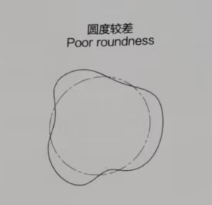
2. Poor Roundness
Phenomenon
The hole inner contour is out-of-round.
✅ Causes
- Non-symmetric point angle, offset chisel edge
- Large drill run-out
- Excessive clearance angle
- Insufficient drill rigidity
- Unstable workpiece clamping
✅ Solutions
- Re-grind the drill and inspect precision after grinding
- Use high-accuracy clamping system & calibrate spindle
- Adjust relief angle; select drill with higher rigidity
- Firmly fix the workpiece
3. Poor Cylindricity
Phenomenon
Hole diameter changes along the depth of hole.
✅ Causes
- Non-symmetric point angle, large run-out
- Offset chisel edge
- Heavy margin abrasion
- Feed rate set too low
✅ Solutions
- Re-grind drill and check precision
- Increase feed speed to avoid long-time friction of cutting edge
4. Poor Workpiece Surface Quality
Phenomenon
Rough inner hole surface, burrs, built-up edge.
✅ Causes
- Insufficient or unsuitable coolant
- Excessive feed rate
- Heavy abrasion & built-up edge on drill margin
- Chip jamming inside flute
✅ Solutions
- Improve coolant supply; switch to suitable cutting fluid
- Reduce feed rate
- Re-grind drills or choose coated carbide drills
- Optimize drill flute geometry and adopt step feed strategy to avoid chip jam
5. Low Position Accuracy
Phenomenon
Deviation of hole position; inconsistent hole spacing.
✅ Causes
- Low spindle repeat positioning accuracy
- Poor drill clamping & large spindle run-out
- Machining surface not perpendicular to feed direction
✅ Solutions
- Improve machine spindle positioning performance
- Select high-precision holders; calibrate spindle before drilling
- Adjust workpiece to ensure vertical feed direction
6. Bad Linearity & Poor Perpendicularity
Phenomenon
Hole tilting, hole axis not straight.
✅ Causes
- Asymmetric point angle, offset chisel edge, large run-out
- Insufficient drill rigidity
- Uneven workpiece surface; misaligned center point (lathe processing)
✅ Solutions

 ✅ Causes